Can Google Calendar Send Reminders to Guests Automatically?
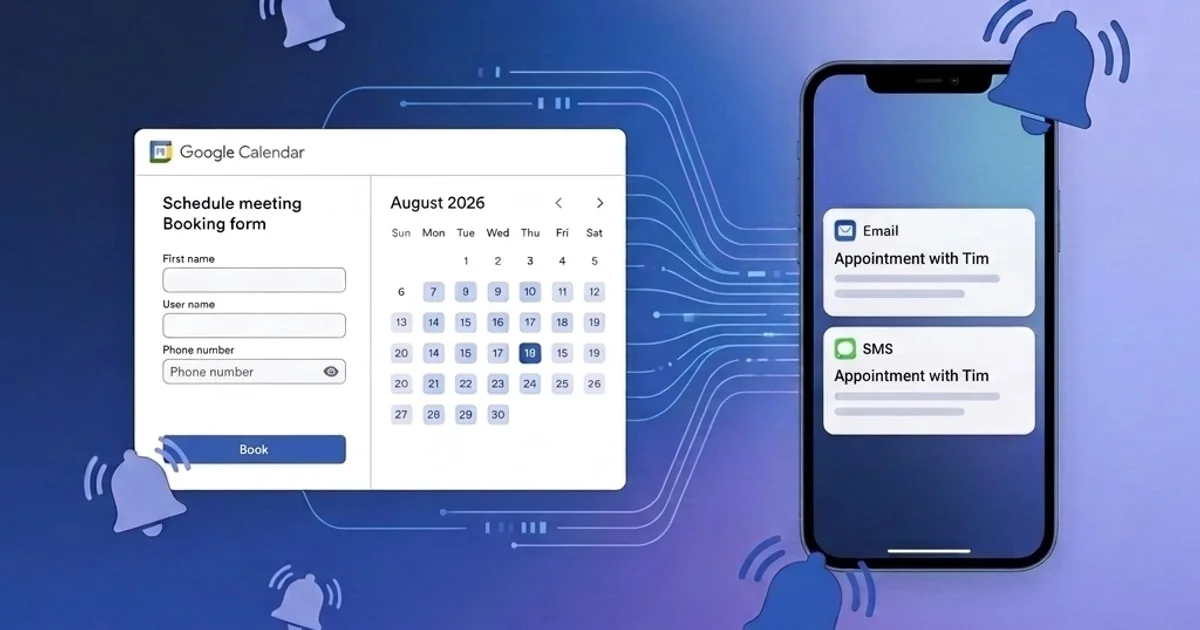
No, Google Calendar does not automatically send reminder notifications to guests for standard events. When you configure a 10-minute or 1-day alert on a Google Calendar event, that notification only alerts you according to your own settings—it is never sent to attendees. To automatically send email or SMS reminders to guests, you must either use Google Calendar Appointment Schedules (available on select Google Workspace tiers) or connect a calendar automation service like Timelier.
Google Calendar Reminders: The Key Distinction
Google Calendar gives you several ways to remind yourself about upcoming meetings, appointments, and events. You can set default notifications for a calendar, customize reminders for individual events, receive alerts by email or popup notifications, and schedule multiple reminders.
Reminding other people is completely different.
For standard Google Calendar events, the notifications you configure control only when you are reminded. They do not create an organizer-controlled reminder schedule for your guests. Your guests receive alerts solely according to their own personal calendar settings.
Google Calendar's Appointment Schedule booking pages function somewhat differently: on eligible paid Google plans, you can automatically send reminder emails to people who book through your booking page. But there are important restrictions.
This guide explains how each type of Google Calendar reminder functions, how to configure notifications for yourself, how to remind guests, and what your options are if you need flexible, automated meeting reminder emails or automated Google Calendar SMS reminders.
Automate Google Calendar Guest Reminders in 2 Minutes
Tired of manually emailing attendees or dealing with missed meetings? Timelier connects directly to your Google Calendar to automatically dispatch customizable email and SMS reminders to all your guests before every appointment.
Google Calendar Reminder Options at a Glance
| Reminder Type | Reminds You | Reminds Guests | Automatic? | Multiple Reminders? | Native Google Support |
|---|---|---|---|---|---|
| Calendar Popup / Notification | ✓ | Guests use own settings | ✓ | ✓ | All accounts |
| Email Notification to Yourself | ✓ | Guests use own settings | ✓ | ✓ | All accounts |
| Manual Email to Event Guests | — | ✓ | No | As needed | All accounts |
| Appointment Schedule Email Reminders | — | ✓ | ✓ | Up to 5 | Eligible paid tiers only |
| Rules-Based Automated Guest Email | ✓* | ✓* | ✓* | ✓* | Via automation service (Timelier) |
| SMS / Text Reminder | ✓* | ✓* | ✓* | ✓* | Via automation service (Timelier) |
* Available through a third-party automation service such as Timelier.
How Google Calendar Reminders Work
One of the most important concepts to understand is the difference between a calendar alert, which are generally only for you, and a reminder that actually gets sent to another person.
Your Google Calendar notification settings are for you
Google Calendar lets you configure default notifications for each calendar and override those settings for individual events.
For example, you might configure your default reminders to email you 1 day before every event and display a notification 15 minutes before every event. And then, for certain events, you might manually override those settings with reminders at different times (or no reminders at all).
Those settings live on your account. Setting a 30-minute reminder on a meeting does not mean that everyone you invited will receive a reminder 30 minutes prior.
Google Calendar guests generally receive reminders according to the notification settings they have configured in their own calendar. Google’s documentation on Calendar notification settings explains how these personal notification settings work.
A reminder sent to guests is different
If your goal is to make sure another person actually receives an actual message before an appointment, you need more than your personal Calendar notification settion.
Depending on the type of Google Calendar event, your options include:
- Manually email the guest list from the event details.
- Use Google's automated reminder emails for bookings made through an eligible paid Appointment Schedule.
- Use an automation service like Timelier to automatically email or text guests based on rules you define.
How to Set Default Google Calendar Reminders
To save time and ensure consistency, you can set default reminders for any new event you create within a specific calendar. Google Calendar allows you to set separate default reminder preferences for timed events and all-day events.
Set default reminders on the Google Calendar website
- Open calendar.google.com.
- In the top right corner, click the gear icon and select Settings.
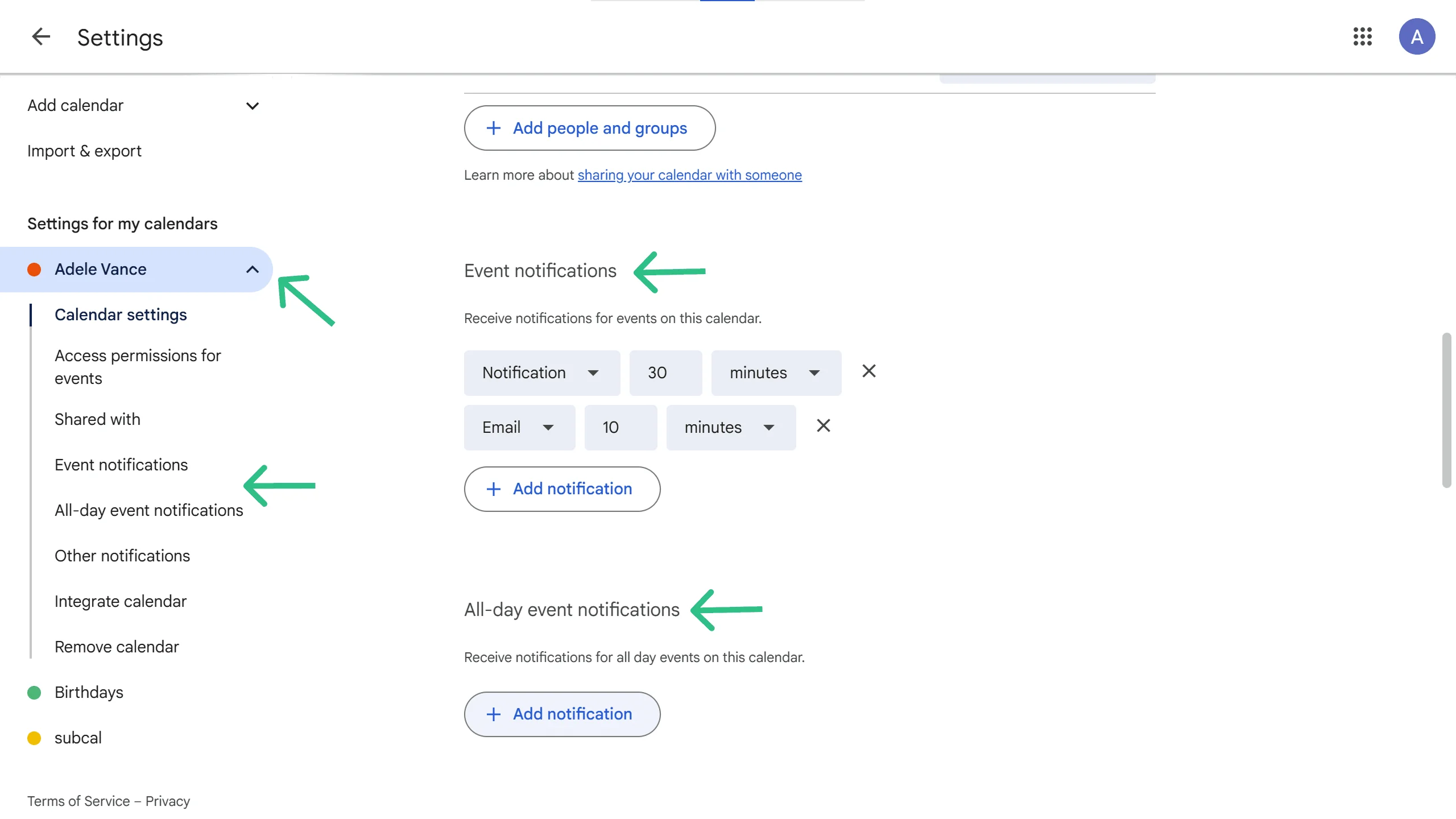
- On the left sidebar under "Settings for my calendars," click the specific calendar you wish to edit.
-
Scroll down to the Event notifications section. You can set separate notifications for timed events and all-day events:
-
“Event notifications” (for timed events):
- Here, you can edit existing notifications, add another notification, or remove a notification for regular events that have a specific start and end time.
- You can choose the time (e.g., 15 minutes before) and method (Notification or Email).
- You can set up multiple reminders (e.g., a notification 10 minutes before and an email 1 hour before).
-
“All-day event notifications”:
- This section allows you to set default reminders specifically for events that last a whole day (without a specific start time).
- By default, all-day event reminders are often set for 9 AM on the day of the event, but you can change this to any desired time and method (Notification or Email).
- You can add multiple notifications for all-day events as well.
-
“Event notifications” (for timed events):
Set default reminders on the Google Calendar mobile app
- Open the Google Calendar app.
- Tap the hamburger menu in the top left.
- Scroll down and tap Settings.
- Tap the calendar you want to change.
- Under “Notifications,” you will find options to adjust the default notification settings. Similar to the desktop version, you will see separate categories for “Default notification” (for timed events) and “Default notification for all-day events.”
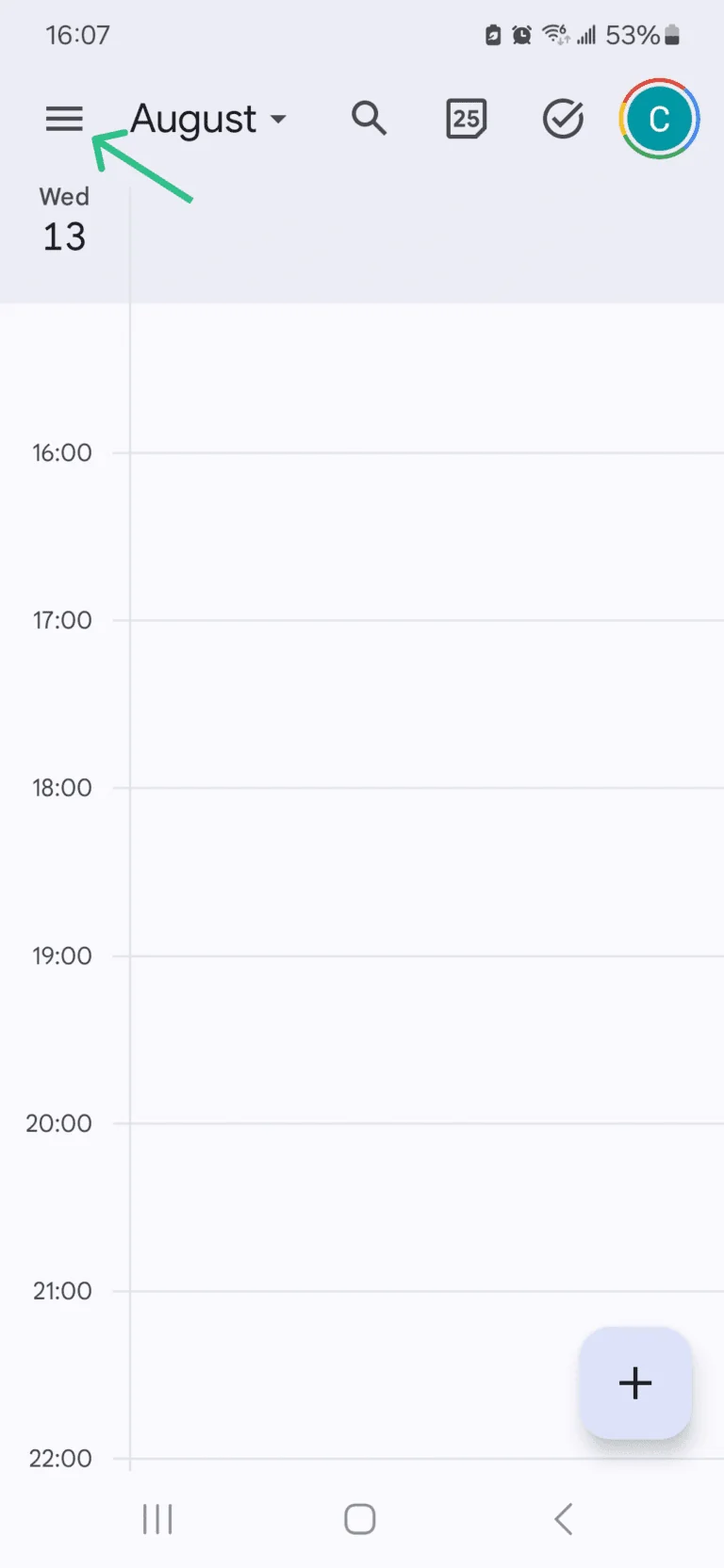
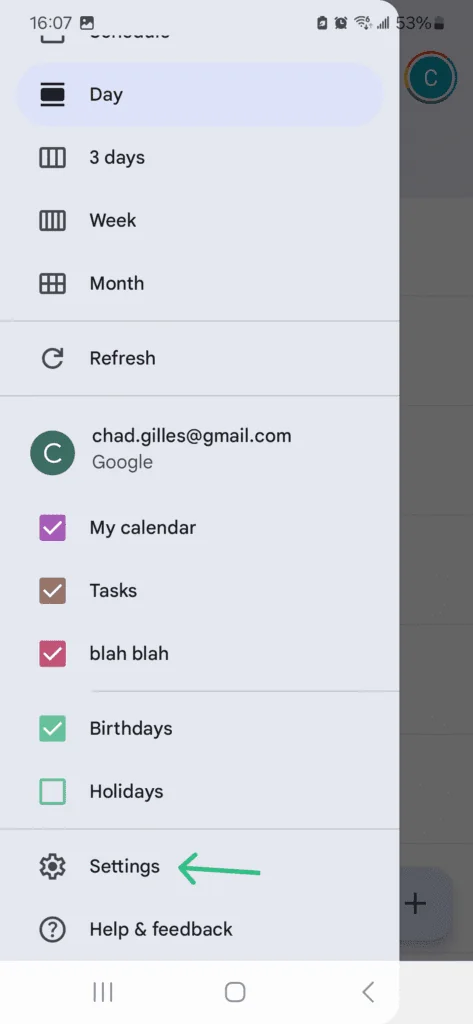
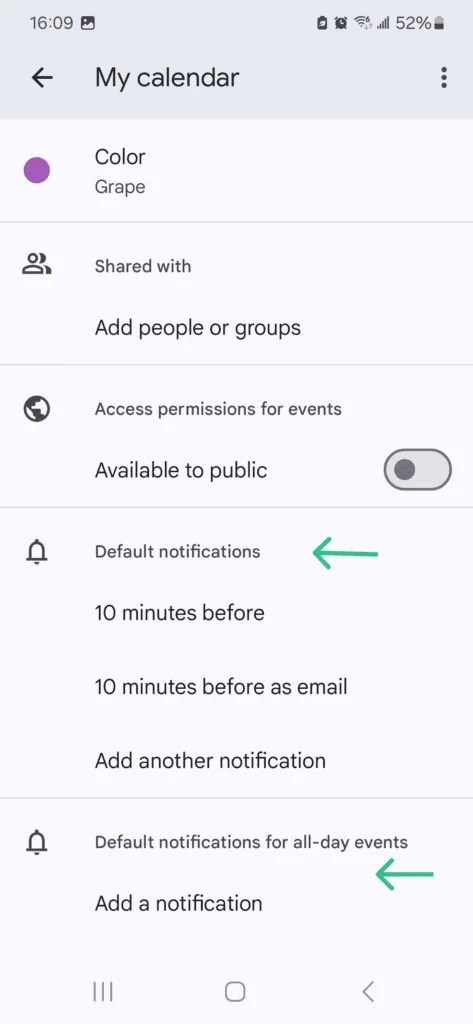
How to send reminders to Google Calendar guests
If you want to remind the people attending your event, rather than just remind yourself, your options depend on how the event was created.
For a regular Google Calendar event, you can manually email the guests, but Google Calendar does not provide a general-purpose way for the organizer to schedule automatic reminder emails to those guests.
For appointments booked through a Google Calendar Appointment Schedule, Google does offer automatic email reminders on eligible paid plans, but there are limitations which we discuss below.
For more control—or to automatically remind guests for any type of Google Calendar event—you can use a reminder service such as Timelier.
Option 1: Manually Email Guests of a Google Calendar Event
For regular Google Calendar events not booked through an Appointment Scheduling booking page, there is no built-in option to automate email reminders to guests. That said, Google Calendar does give you the option to send a manual email reminder to guests. This is useful if you want to send a one-time reminder, meeting update, preparation instructions, or other message before an appointment.
On a computer:
- Open the event.
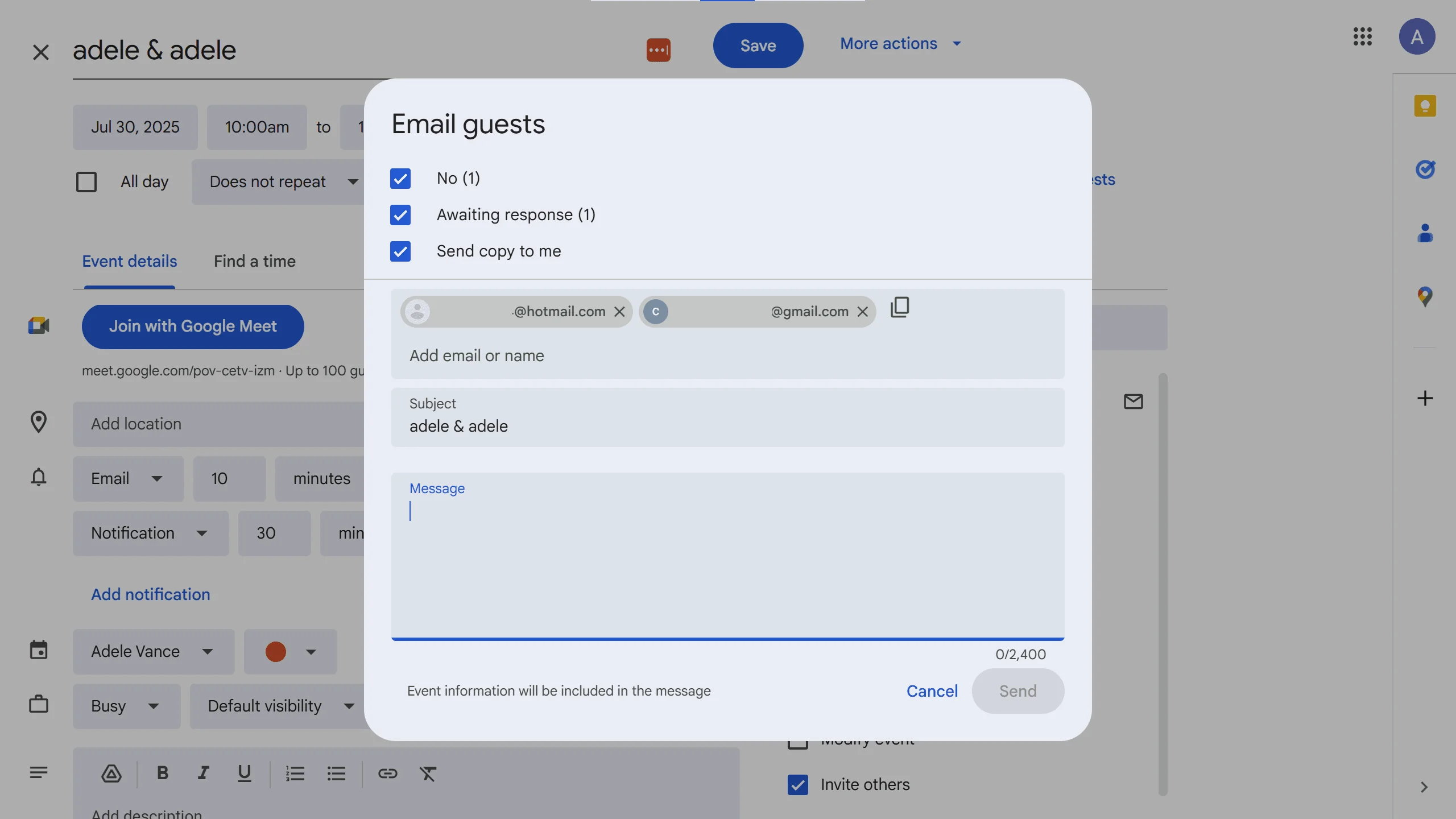
- In the “Guests” section of the event details, locate the envelope icon at the top. Click it.
- A new email window will open, allowing you to compose your message.
- Helpfully, you will see checkboxes next to various recipient groups based on their response to the invite (“Yes,” “No,” “Maybe,” “Awaiting response,” “Send copy to me”). You can select specific groups and you can also manually add or remove email addresses in the “To,” “Cc,” or “Bcc” fields.
- Compose your message and click “Send.”
On Mobile:
- Tap the event.
- Click the envelope icon to “Email guests.” This will pop up the option to send one of a handful of canned messages (e.g., “be there in about 10 minutes”) or you can click “write your own” to open the compose email window with the To and CC fields prepopulated based on the event guests.
- Edit the recipients, if desired, compose the message, and click “send”.
This works well for an occasional reminder, but it is a manual process. Google Calendar does not let you schedule this email to automatically go out a day or an hour before every regular Calendar event.
If you frequently need to remind customers, clients, students, or other attendees, manually emailing the guest list for every appointment can quickly become impractical.
Option 2: Automatically Send Email Reminders for Google Calendar Appointment Schedules
As mentioned above, regular Google Calendar events (created by you manually or by receiving an email invite) do not have a way to schedule an email reminder to guests.
Events created via Google Calendar’s Appointment Schedules—the feature that lets you create a booking page where other people can schedule time with you—can send automatic email reminders to people who book appointments.
With an eligible paid Google subscription, you can configure an Appointment Schedule to send up to five reminder emails before an appointment according to Google’s Appointment Schedule documentation.
Google lets you choose when those reminders are sent, but there are some limitations:
- Automatic email reminders are a premium Appointment Schedule feature and aren’t included with every Google plan.
- They only apply to appointments booked through that Appointment Schedule, not to ordinary events elsewhere on your Google Calendar.
- You can choose the timing of the reminders, but Google does not let you customize the text of the reminder emails.
If you use a Google Calendar booking page and Google’s built-in reminders meet your needs, this can be the simplest solution.
If you need a detailed walkthrough of the native Google options and how to add custom email or SMS reminders to booked appointments, see How to Send Automated Email and SMS Reminders for Google Calendar Booking Pages.
Automate Guest Reminder Emails for Any Google Calendar Event with Timelier
If you need a reliable way to automatically send reminders to guests for regular Google Calendar events, or you need more flexibility than Google’s Appointment Schedule reminders provide, Timelier can send email (and SMS) reminders based on the events already on your calendar.
Instead of remembering to manually send reminders, you create rules that determine which events get reminders, who receives them, when they are sent, and what they say.
For example, you could automatically:
- email guests 24 hours before an appointment;
- send another reminder one hour before it starts;
- send reminders only for events on a particular calendar;
- target events whose title contains a particular word or phrase;
- send reminders based on an attendee’s RSVP status; and
- include custom instructions, links, cancellation policies, or other information in the reminder.
Can Google Calendar Send SMS or Text Reminders?
Google Calendar does not currently offer a built-in option to send SMS/text-message reminders for calendar events.
If you want to automatically text yourself or your guests before an appointment, you need to connect Google Calendar to a third-party reminder service.
Timelier can send automated SMS reminders based on the same kinds of rules used for automated email reminders. For example, you can:
- send a text 24 hours before an appointment;
- send a second text shortly before the event starts;
- limit reminders to events on a particular calendar or matching certain criteria; and
- customize the message that recipients receive.
Sending SMS reminders to guests requires a phone number for the recipient. How that number is collected depends on how the event was created. Google Calendar Appointment Schedules, for example, can collect a phone number through a custom booking-form field.
For a complete walkthrough, including how to obtain the recipient’s phone number and configure automated texts, see How to Send SMS/Text Reminders for Google Calendar Events.
How to Set Up Automated Google Calendar Guest Reminders with Timelier
-
Start a Free Trial
Start a free trial at app.timelier.com.
-
Connect your Google Calendar
This is done via the familiar and secure “login with Google” process used by millions of apps and websites.
-
Create a reminder rule
Set filters that determine which events should have guest reminders and then set the timing, type, and recipients of the guest reminders.
That’s it! For complete instructions, visit our detailed instructions for setting up Timelier for automating Google Calendar reminders. Once the rule is active, Timelier monitors your Google Calendar and automatically sends reminders as matching events approach.
This is particularly useful when Google Calendar is the central place where appointments from several different sources end up. Whether the events are created manually, sent to you as a meeting invitation, or created by another scheduling application; Timelier can apply the same reminder rules to all of them.
If the event was created specifically through a Google Calendar Appointment Schedule, see our booking-page reminder guide for the more specialized setup options available for those appointments.
FAQ: Google Calendar & Guest Reminders
Can Google Calendar send reminders to guests?
If the appointment was booked through a Google Calendar Appointment Schedule, Google can send automatic reminder emails on eligible paid plans.
For Google Calendar events created manually or by receiving an invite, automatically sending reminders to guests requires a third-party service such as Timelier.
Can I set a reminder for someone else in Google Calendar?
If you need to make sure a guest receives a reminder at a specific time, you can manually email the guest, use Google’s automatic Appointment Schedule reminders when applicable, or use an automation service such as Timelier.
Can Google Calendar send SMS / text-message reminders?
To automatically send text reminders based on Google Calendar events, you need a third-party service. See our guide to sending SMS/text reminders for Google Calendar events for a complete walkthrough.
Can Google Calendar send email reminders?
For guests, Google also supports automatic reminder emails for appointments booked through eligible Google Calendar Appointment Schedules. For ordinary Calendar events (created manually or by receiving an email invitation), Google does not provide an automatic guest email reminder feature.
How many reminders can I set for a Google Calendar event?
These notifications apply to your account and are not shared with guests who use Google Calendar. Guests normally use their own reminder settings.
What happened to Google Calendar Reminders?
If you previously used Google Calendar Reminders for personal to-dos such as “call the dentist at 3 PM,” you now create a Google Task with a date and time instead. Tasks can appear directly on your Google Calendar.
This is separate from the event notifications and guest reminders discussed in this guide.
What's the difference between a Google Calendar reminder and a notification?
For Calendar events, Google officially refers to the alerts you receive before an event as notifications. These can include browser, mobile, and email notifications.
Google’s older product called Reminders was a separate personal to-do feature that has since been replaced by Google Tasks.
In this guide, we use “Google Calendar reminders” in the broader sense that people commonly search for it: notifications for yourself and reminder messages sent to event guests.